
• 13 September 2026
Cooltech Products worked with Daikin and the project team to develop a cooling solution that addressed limited space, duct resistance, noise requirements and maintenance access.
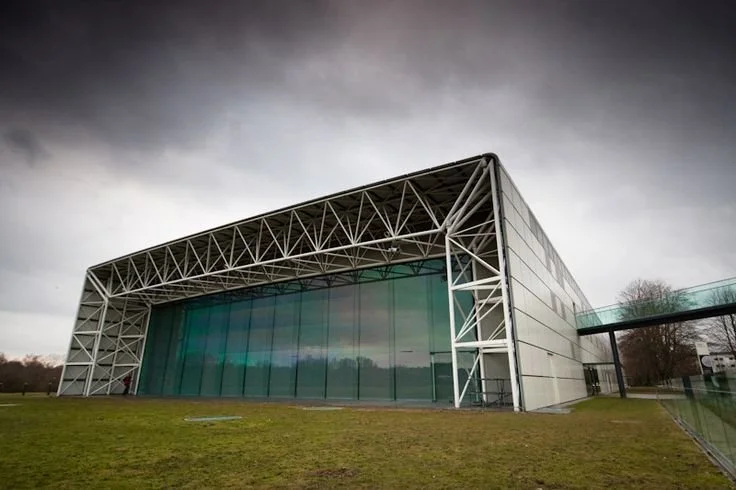
The Sainsbury Centre at the University of East Anglia in Norwich is an architectural landmark, also recognised as the Avengers headquarters in Marvel films. Behind the scenes, replacing its existing indoor chillers presented a demanding engineering challenge.
The replacement equipment needed to fit within a restricted plant room and connect to the building’s ducted ventilation arrangement. Selecting suitable equipment meant considering cooling capacity, airflow, available fan pressure and noise together—while ensuring the installation could still be serviced.
A solution designed around the available space
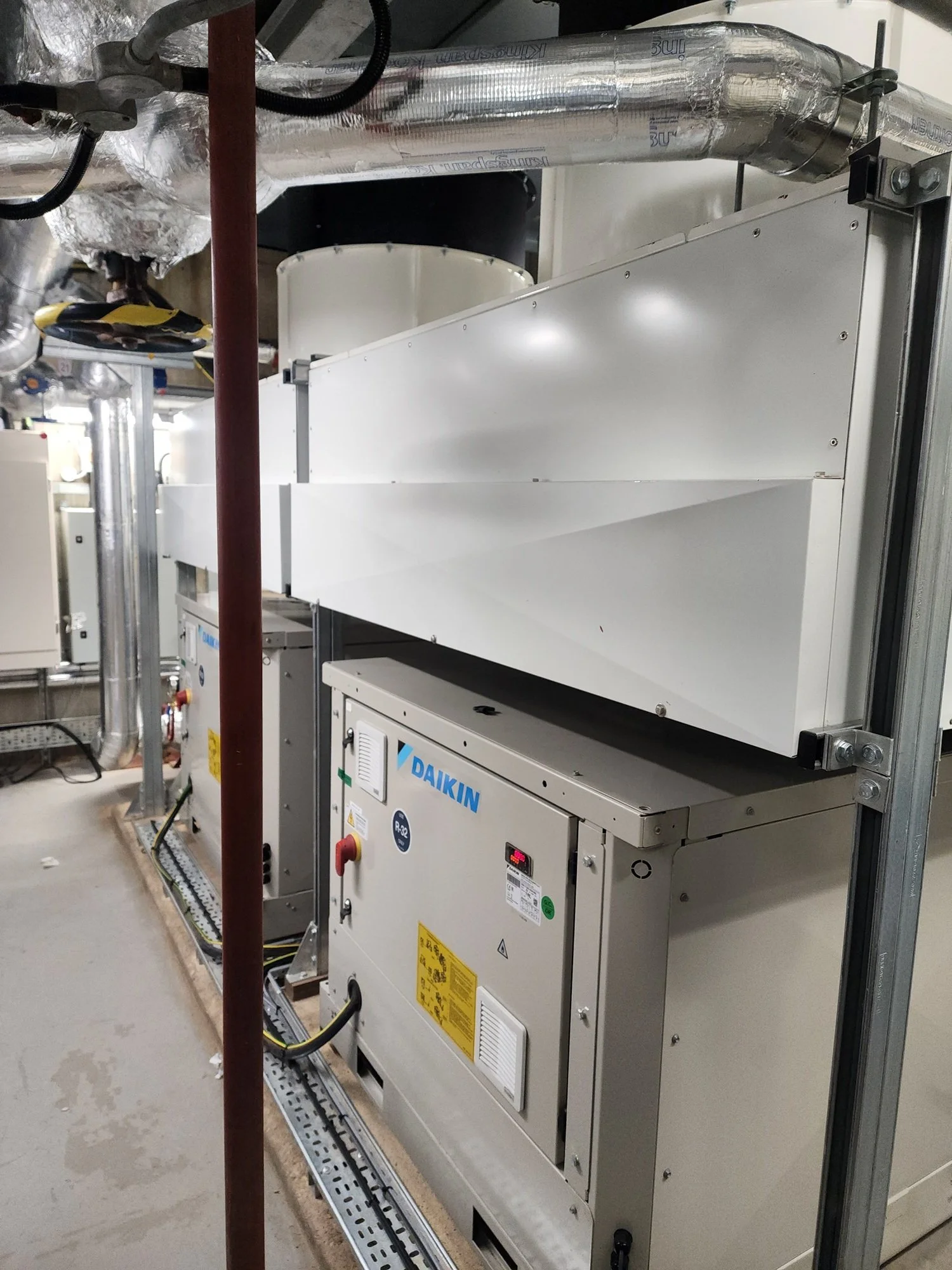
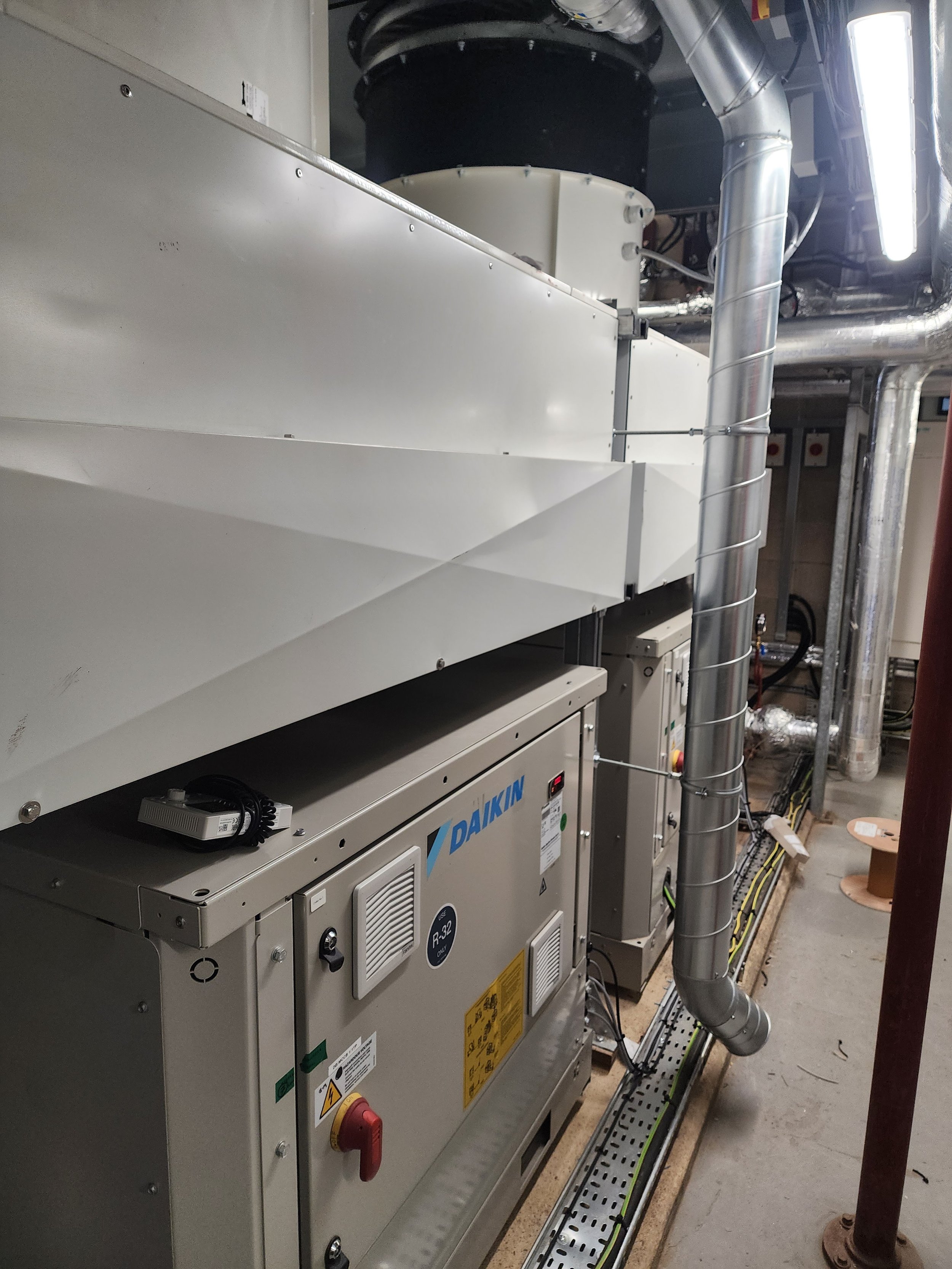
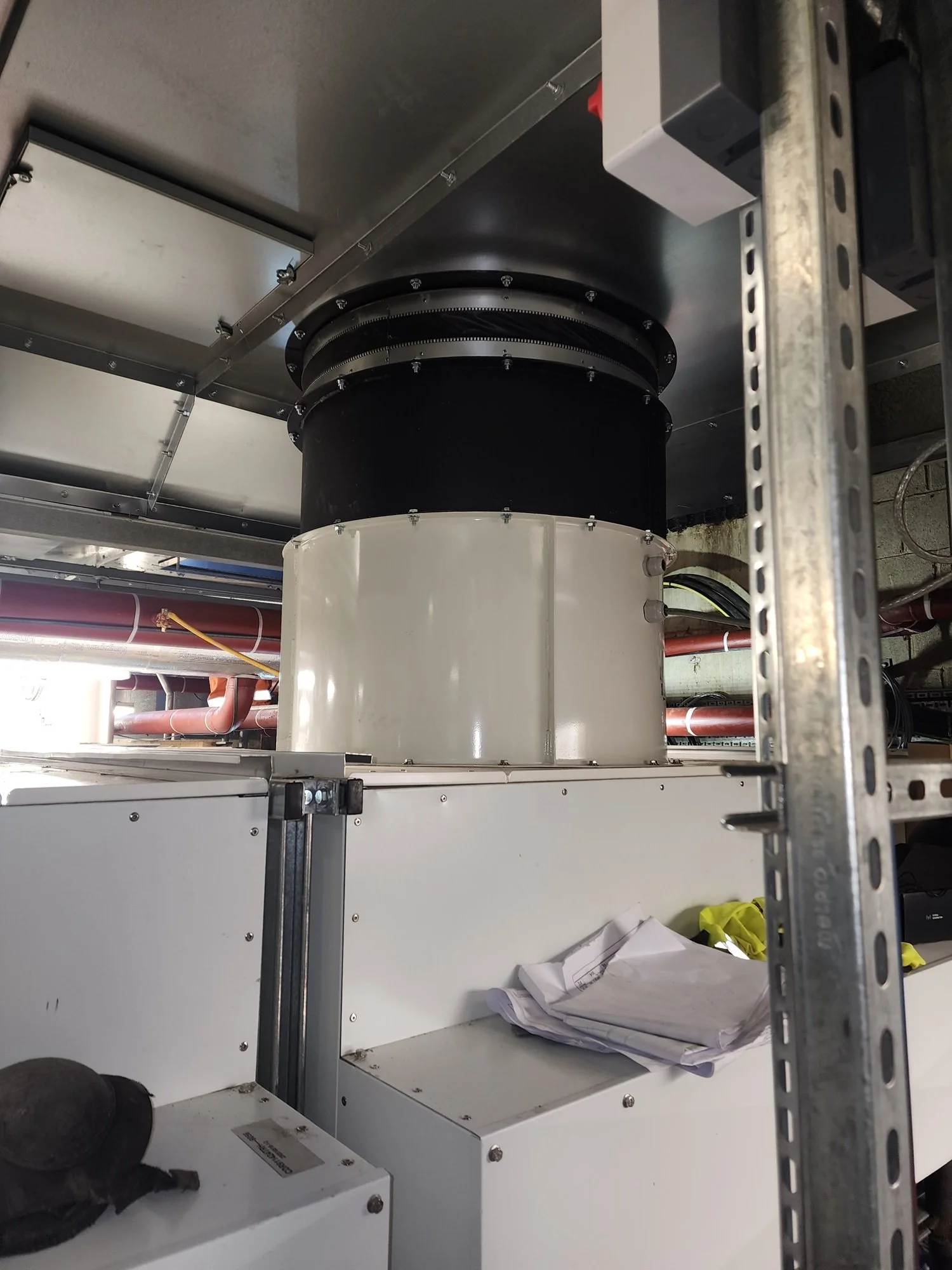
Daikin supplied four condenserless R32 chiller modules, with Cooltech selecting and supplying four bespoke remote condensers. Separating the chillers from their condensers allowed the heat-rejection equipment to be arranged above the chiller modules, making use of the available plant-room height.
Cooltech worked with the condenser manufacturer and consultant to develop the coil dimensions, fan arrangement and support details. An earlier, longer two-fan proposal could not fit the available space, so the design progressed to a compact arrangement with one high-static-pressure AC fan per condenser, operated through a variable-frequency drive (VFD).
This design process balanced the physical envelope against thermal performance, duct resistance and acoustic considerations.
Matching heat rejection to the chiller duty
A condenser must reject both the heat removed from the chilled-water circuit and the heat added by the refrigeration process. Selecting against cooling capacity alone would understate the required duty.
At the project’s selected operating conditions, each Daikin module provided 107.1 kW of cooling, with 36.9 kW of chiller power input. Together, these indicated approximately 144 kW of heat rejection per module.
Cooltech’s corresponding condenser selection was based on: an entering air temperature of 35°C with an airflow of 36,000 m³/h and an available external static pressure150 Pa at a saturated condensing temperature of 52°C
Delivering airflow through the ducted system
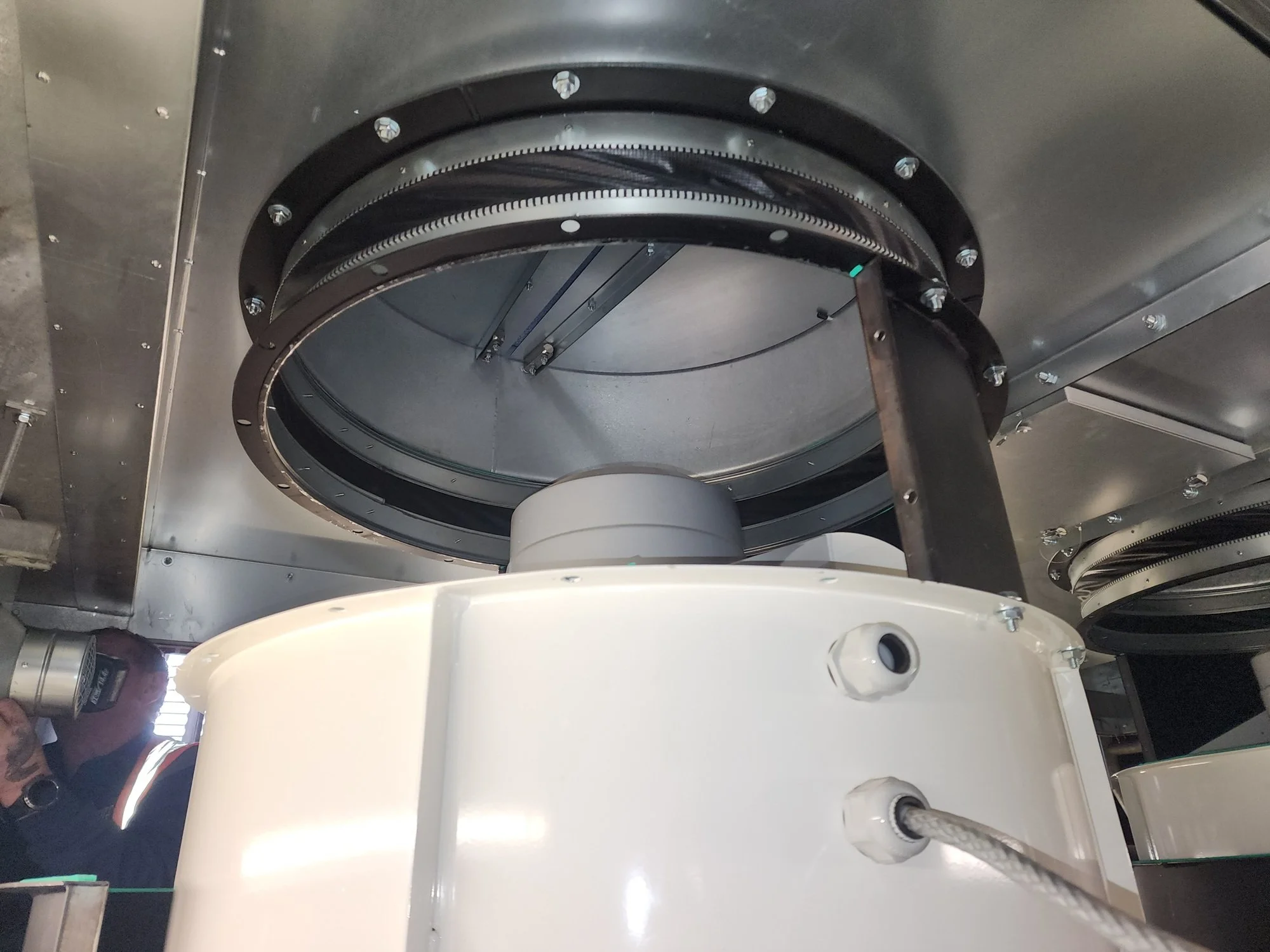
The condensers needed to discharge into the building’s ducted plenum. Their fans therefore had to overcome the resistance of the external air path as well as move air through the condenser coils.
Cooltech selected high-static-pressure fans and coordinated circular discharge connections with the ductwork arrangement. VFD control allowed fan speed to respond to refrigerant condensing pressure as operating conditions changed.
Noise was an important design consideration alongside airflow and pressure capability. The solution required coordination between equipment selection, fan operation and the building’s ducted arrangement, rather than treating the condenser as an isolated item.
Making space for maintenance
Fitting equipment into a tight plant room is only part of the task: it must remain accessible throughout its working life.
Cooltech coordinated revised support-leg details so the condensers could be installed on raised structures above the chillers.
Design discussions also addressed a removable section of discharge duct to allow future fan replacement. Considering these requirements during layout development helped the project team accommodate both installation and subsequent servicing.
Refrigerant pipework and controls support
Cooltech provided thermal selection, refrigerant-pipework sketches and technical advice covering connection arrangements, liquid drainage, oil return and coordination between the chillers and remote condensers.
Each condenser was supplied with a separate VFD and pressure transducer. Cooltech supported the electrical and controls teams in developing pressure-based fan-speed control, enable signals and direct condenser-fault monitoring for the building management system.
During commissioning, our work included investigating pressure-signal response and fan behaviour, replacing a faulty pressure probe and supporting the use of screened control cabling. A compressor interlock and fan run-on delay were also introduced for this installation.
This support helped resolve practical issues at the interfaces between the refrigeration equipment, field wiring and control system.
Commissioning and continued support
Cooltech Products supported the project with on-site commissioning, assistance integrating the Daikin chiller and condenser fan controls, and technical support for the building management system (BMS) interfaces. Ongoing support through an annual maintenance contract includes coil cleaning, controls and electrical inspections, and vibration checks. This proactive approach helps maintain cooling performance, identify developing issues early and extend the equipment’s service life.
Maintaining heat-transfer performance
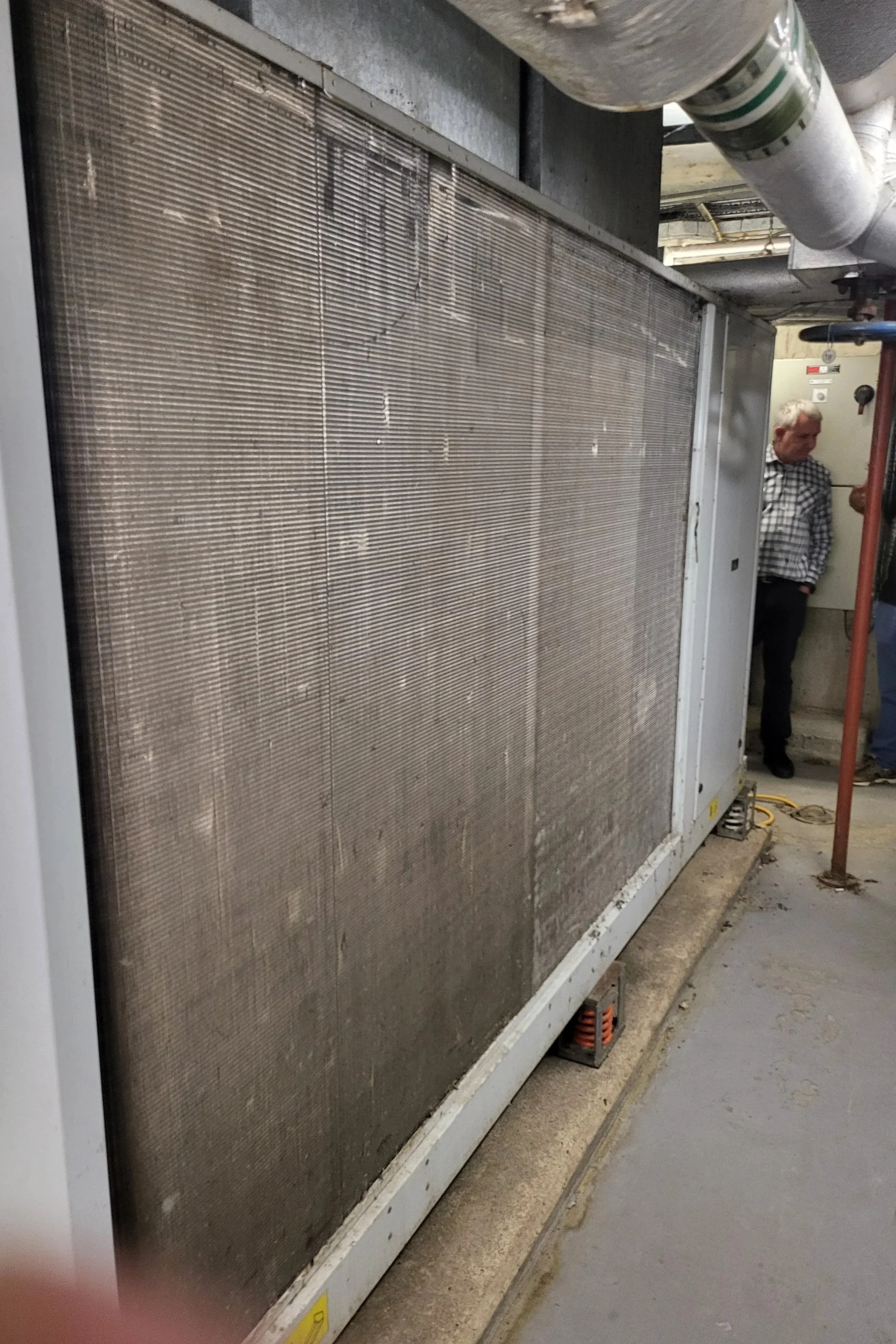
Regular maintenance is important even when condensers are installed indoors. Deposits on coil surfaces can restrict airflow and impair heat transfer, while changes in fan operation, vibration or controls can affect the performance of the complete system.
The planned maintenance scope includes cleaning suited to the indoor location, inspection of electrical and control components, vibration checks and observation of fan response during chiller staging.
Combining physical inspection with operational checks helps identify developing issues and supports reliable heat rejection throughout changing seasonal loads.
From bespoke selection to ongoing maintenance
This project demonstrates Cooltech’s support from equipment selection and bespoke design through to commissioning and maintenance—developing solutions for challenging conditions, accommodating duct resistance and restricted plant-room layouts, and resolving practical refrigeration and control-system issues.
Planning a chiller replacement or a condenser installation in a restricted plant room? Contact Cooltech Products for support with equipment selection, thermal design, controls and ongoing maintenance.