
On-site copper tube repair, remote condition monitoring and technical support for CHP cooling equipment.
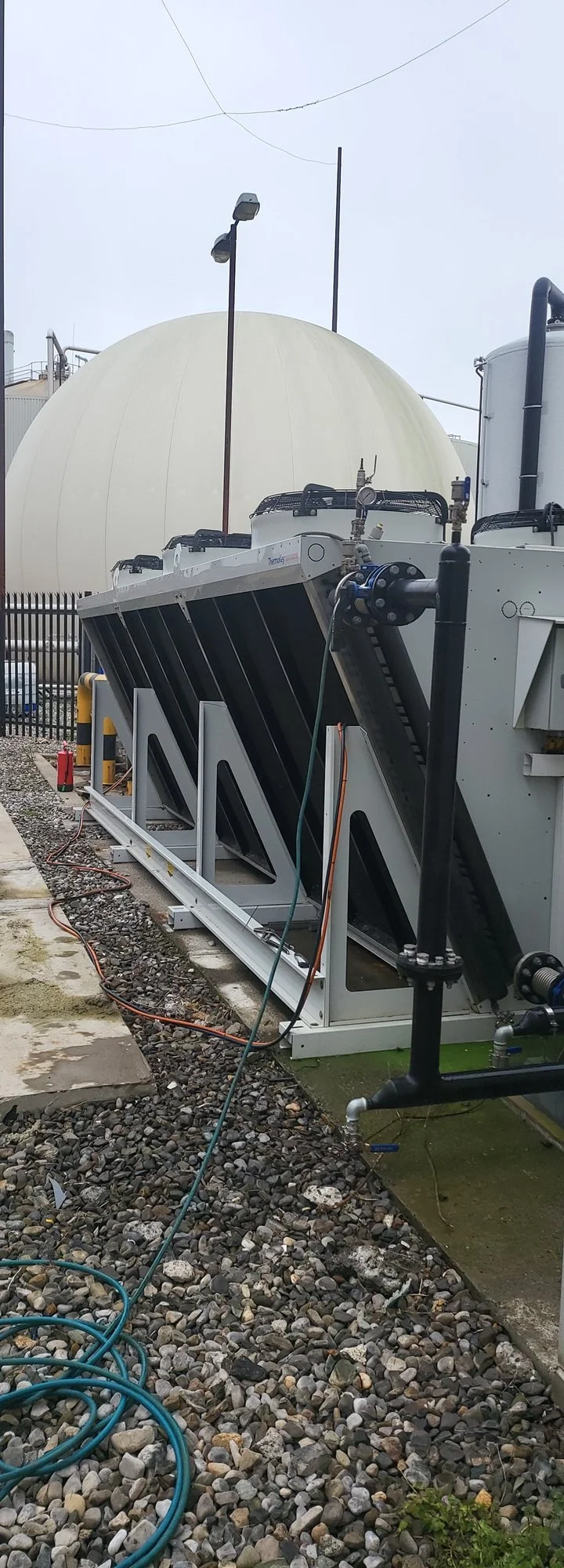
Cooltech Products supported Celtic Anglian Water at its Ringsend wastewater treatment site in Dublin, repairing a damaged dry air cooler serving the biogas-fuelled combined heat and power (CHP) plant. Our work combined an immediate copper tube repair with diagnostic monitoring to help investigate the failure and support longer-term reliability.
The challenge: maintaining essential cooling
The dry air coolers provide heat rejection for the CHP cooling system. A leak can lead to coolant loss, reduced cooling availability and disruption to generating equipment, making the condition of the heat exchangers important to plant operation.
The investigation needed to consider several possible influences, including the corrosive site environment, vibration and repeated temperature changes. Repairing the leak addressed the immediate defect; understanding the operating conditions was the next step towards reducing the risk of recurrence.
Specialist on-site repair of thin-wall copper
Cooltech carried out an on-site repair to the leaking copper tube. These heat exchangers use exceptionally thin copper tubing, with wall thicknesses below 0.5 mm, requiring specialist brazing skills and careful control of heat input.
Thin-wall tubing leaves little margin for overheating, particularly where corrosion may already have reduced the remaining wall thickness. Surface preparation, assessment of the surrounding material and a controlled brazing technique are therefore essential. Excessive heat can burn through the tube or damage adjacent areas.
A successful repair also depends on recognising the limits of the material. Localised damage may be repairable, while widespread deterioration can make replacement the more appropriate long-term solution.
Failure investigation supported by remote monitoring
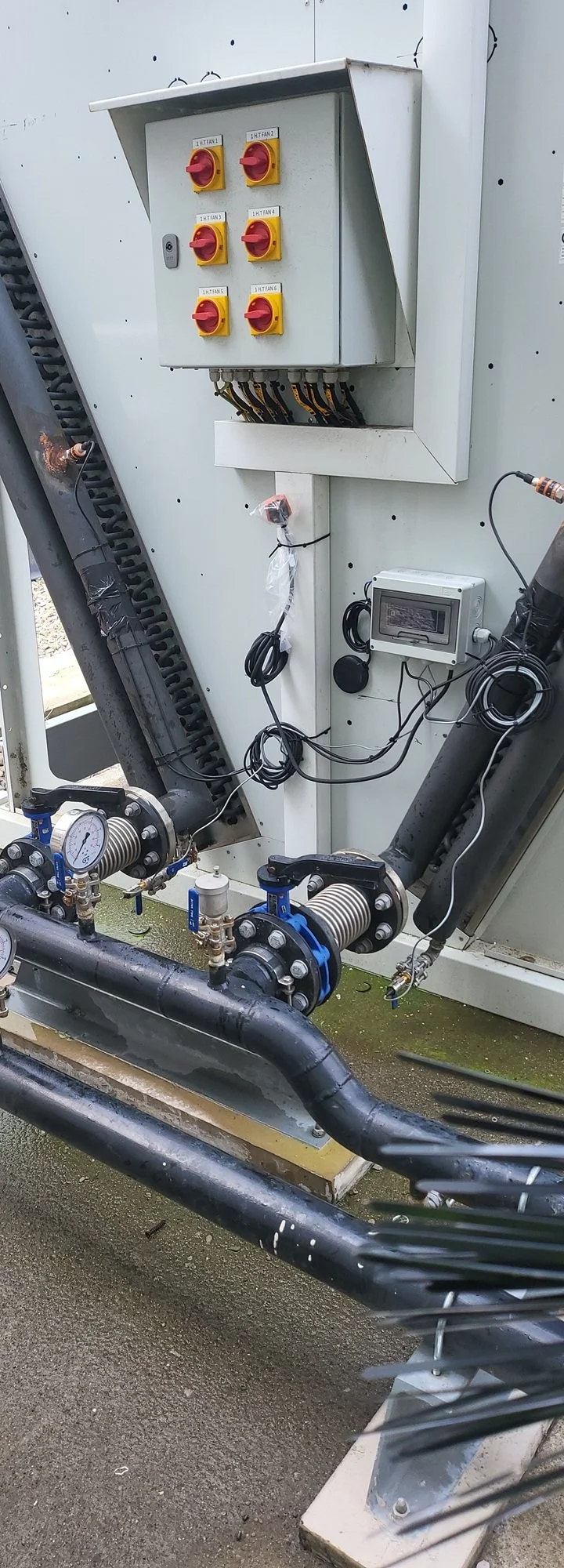
To support the investigation, Cooltech installed vibration and temperature sensors that transmitted operating data to the equipment manufacturer. This allowed the factory’s technical team to review the cooler’s behaviour over time, extending the assessment beyond a single site visit.
Vibration trends can help identify conditions requiring closer inspection, such as fan imbalance, loose mountings or movement transmitted into the coil and connecting pipework. Temperature trends provide information about operating changes and heating and cooling cycles that may contribute to repeated expansion and contraction.
Corrosion in a wastewater environment
Corrosion observed on site was another factor in the investigation. Hydrogen sulphide (H₂S) can develop under anaerobic conditions in wastewater systems and can attack copper and other metals. It is therefore a plausible contributor in this environment, although its role in this particular failure has not been confirmed.
Why regular service and maintenance matter
Regular inspection and servicing create opportunities to identify deterioration before it develops into a leak or loss of cooling. For equipment operating in a demanding wastewater environment, maintenance should include:
Inspection of tubes, return bends and joints for corrosion, staining and signs of leakage.
Appropriate coil cleaning to remove deposits, using methods suited to the materials and their condition.
Checks of fans, fixings, supports and pipework for looseness or excessive movement.
Review of vibration and temperature trends against established operating behaviour.
Assessment of coolant condition and corrosion protection against the equipment manufacturer’s requirements.
Cleaning methods must account for fragile fins and thin-wall tubing. Aggressive pressure washing or unsuitable chemicals can cause further damage to an already weakened heat exchanger.
Remote monitoring complements these physical checks. It can flag changes that justify intervention, but it does not directly measure corrosion or replace an inspection of the coil.
Technical support beyond the repair
Cooltech’s work at Ringsend combined practical on-site repair with manufacturer-supported investigation and remote condition monitoring. This gave the operator both an immediate repair and a stronger basis for planning maintenance and further corrective work.
From specialist brazing and damaged-coil assessment to diagnostic monitoring and replacement advice, Cooltech helps customers make informed decisions about the reliability and remaining service life of their heat exchangers.