
UK Supreme Court: Upgrading Dry Coolers with EC Fans and Intelligent Controls
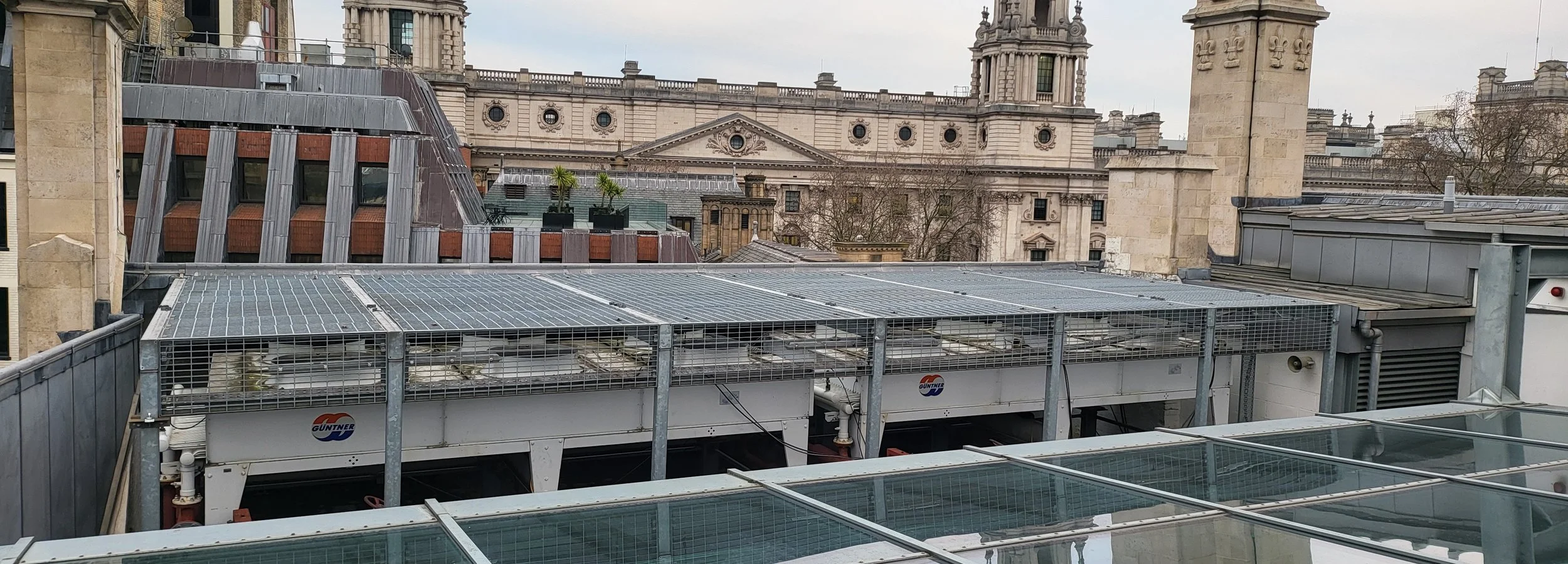
Refurbishing existing equipment to improve control, support energy efficiency and strengthen preventative maintenance.
Cooltech Products refurbished two rooftop dry air coolers at the Supreme Court of the United Kingdom, replacing ageing AC fans and stepped controls with EC fans, bespoke HYterm controls and BACnet integration.
The project addressed failing components while giving the building’s engineering team greater visibility and control over its cooling system.
Understanding the existing system
The two dry air coolers serve a shared condenser-water circuit connected to two water-cooled chillers. Each cooler originally had six fixed-speed AC fans, switched on and off in stages to regulate water temperature.
The existing master/slave arrangement brought the second cooler into operation only after the first had reached full capacity. This concentrated operating hours on the lead cooler. At the time of Cooltech’s survey, two fans had failed and electrical-panel repairs had already been required.
However, inspection indicated that the heat-exchanger cores remained in serviceable condition. This made refurbishment a practical option: upgrade the fans and controls while retaining the existing coils and avoiding the disruption of complete cooler replacement.
From stepped control to variable-speed operation
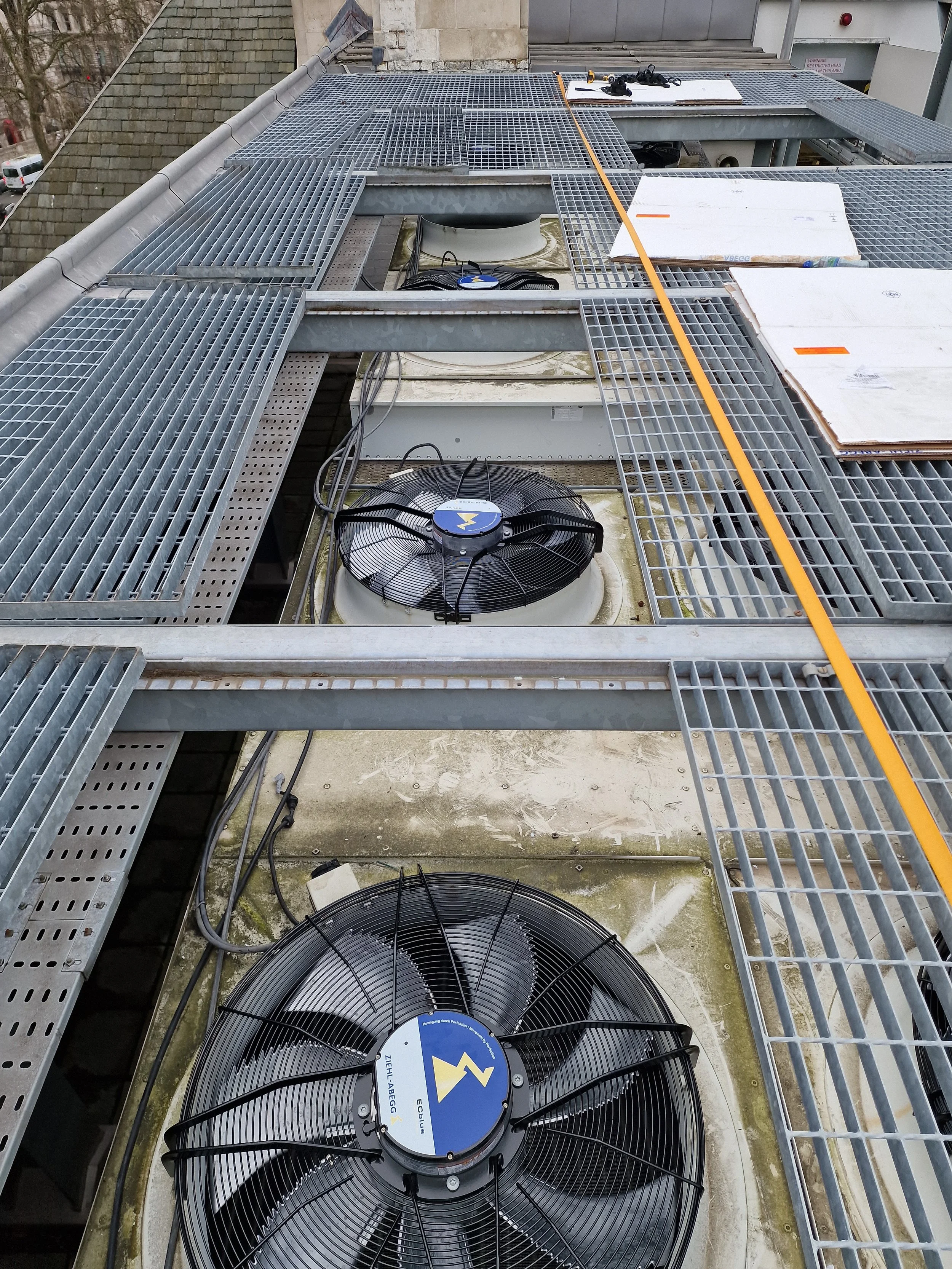
Cooltech replaced the existing fans with EC technology and installed new electrical panels and bespoke HYterm controls.
With the original arrangement, an energised fan operated at full speed until its control stage switched it off. The new EC fans can vary their speed continuously to match the cooling requirement more closely.
The energy-saving opportunity comes from both efficient motor technology and improved control. During periods of reduced demand, the fans can run more slowly rather than repeatedly switching full-speed stages on and off.
Fan power falls steeply as speed reduces. Taking advantage of this relationship can reduce part-load electricity consumption while maintaining the required heat rejection. Actual savings depend on cooling load, weather conditions, operating hours and the control settings.
Stepless modulation also provides finer control of condenser-water temperature, reducing the abrupt changes associated with staged fan operation.
Optimising the complete cooling system
Reducing fan electricity consumption is only part of the opportunity. Dry cooler operation also affects the efficiency of the chillers it serves.
Within the chiller manufacturer’s permitted operating range, cooler condenser water can reduce compressor power demand. Achieving that lower temperature may require additional fan power, so the best operating point must consider the combined energy use of the fans and chillers.
The new controls provide the flexibility to adjust setpoints and evaluate this balance as ambient conditions and building demand change.
This allows the building team to pursue whole-system efficiency, rather than focusing solely on the lowest possible fan speed or a single fixed water-temperature target.
BACnet integration: making performance visible
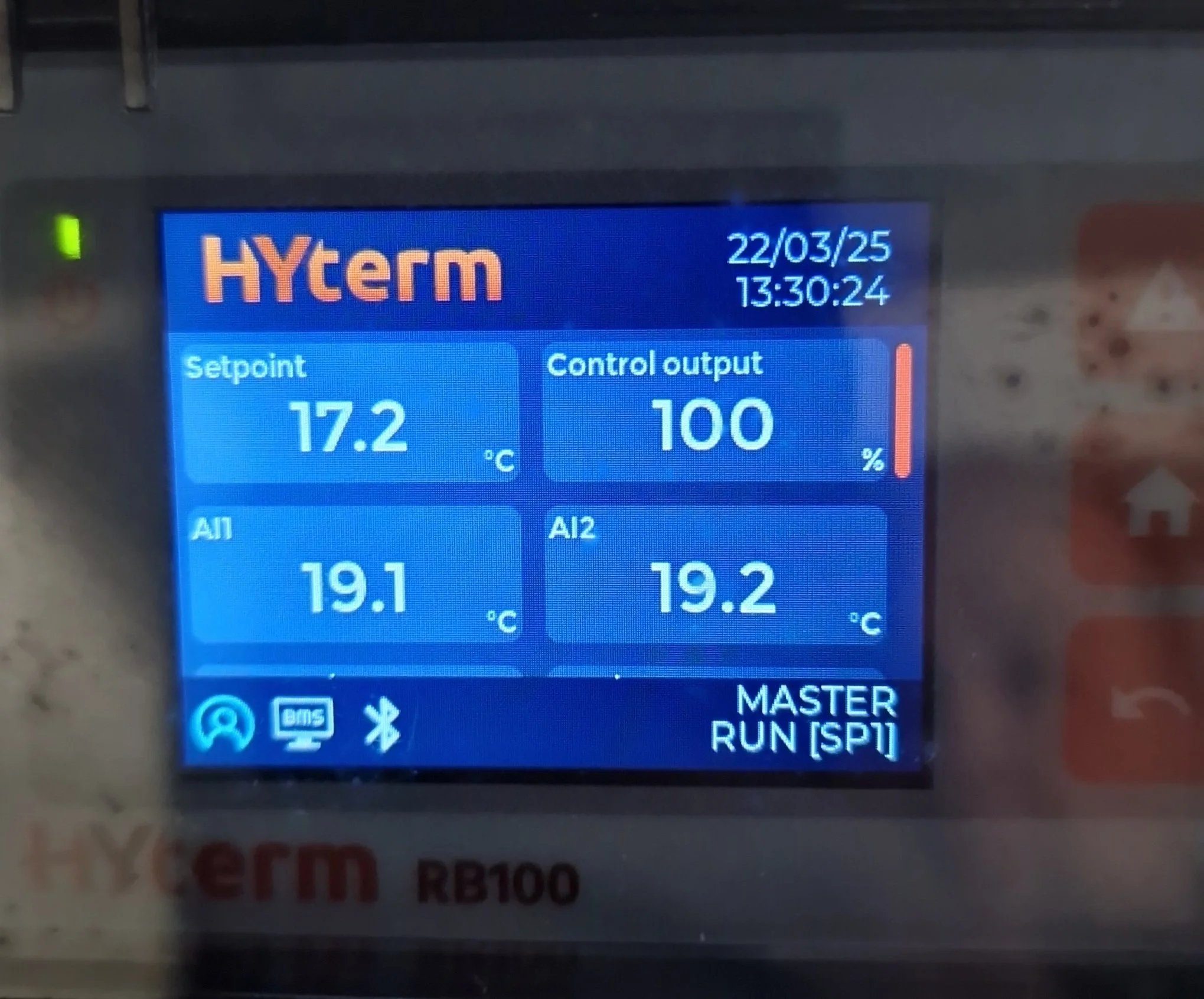
The new controller provides BACnet access through the building management system, allowing the building team to monitor:
Fan speed.
Fan power.
Accumulated running hours.
Access to operating data, together with adjustable control setpoints, supports more informed optimisation. Engineers can review how the fans respond to demand and assess the effect of control changes alongside chiller performance.
This turns the dry coolers into a more visible and manageable part of the building’s cooling system.
Practical support from survey to commissioning
Cooltech’s involvement included the initial site assessment, review of refurbishment options, fan replacement, new electrical panels and control cabling, testing, commissioning and BMS interface support.
The project demonstrates how existing cooling equipment can be modernised through targeted engineering work. Retaining serviceable heat exchangers while renewing fans and controls provided improved controllability, operational visibility and opportunities to reduce energy consumption.
Energy benefits described here explain the upgrade’s operating principles and optimisation potential. A verified before-and-after energy saving has not been established for this case study.
Coil cleaning: supporting the fan upgrade
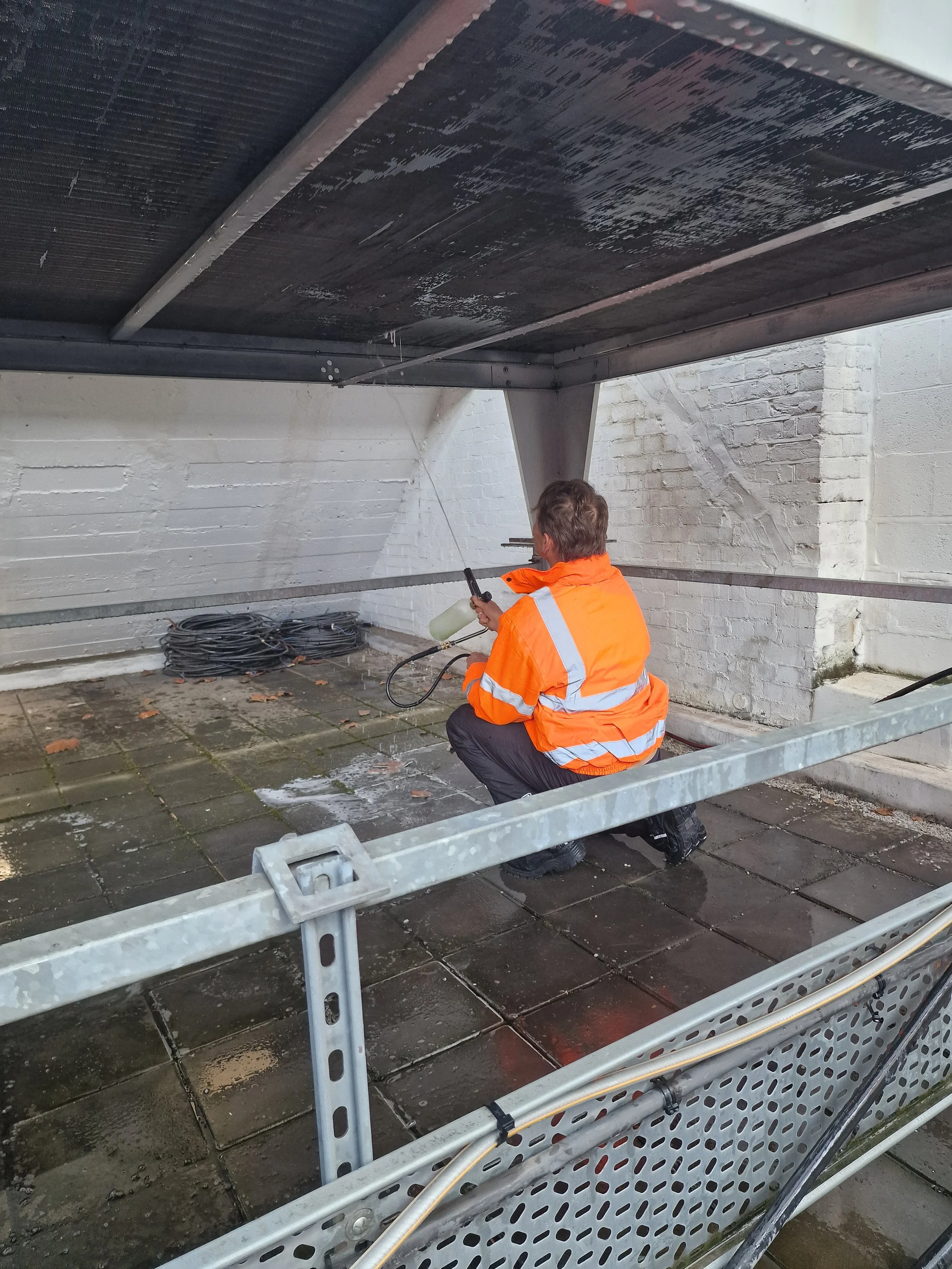
As part of the refurbishment, Cooltech engineers cleaned the existing heat-exchanger coils to remove accumulated dirt and deposits. Clean coils allow air to pass more freely and help maintain effective heat transfer, enabling the new EC fans to deliver the required cooling with less unnecessary resistance. Maintaining coil cleanliness also supports condenser-water temperature control and chiller efficiency. Regular cleaning, using methods suited to the condition of the fins, remains an essential part of protecting the retained coils and sustaining the benefits of the upgrade.
Could your existing cooling equipment benefit from refurbishment?
Cooltech Products can assess dry coolers and other cooling equipment for EC fan upgrades, bespoke controls, BMS integration and maintenance improvements.
Contact us to discuss your equipment, operating requirements and opportunities to improve performance.